
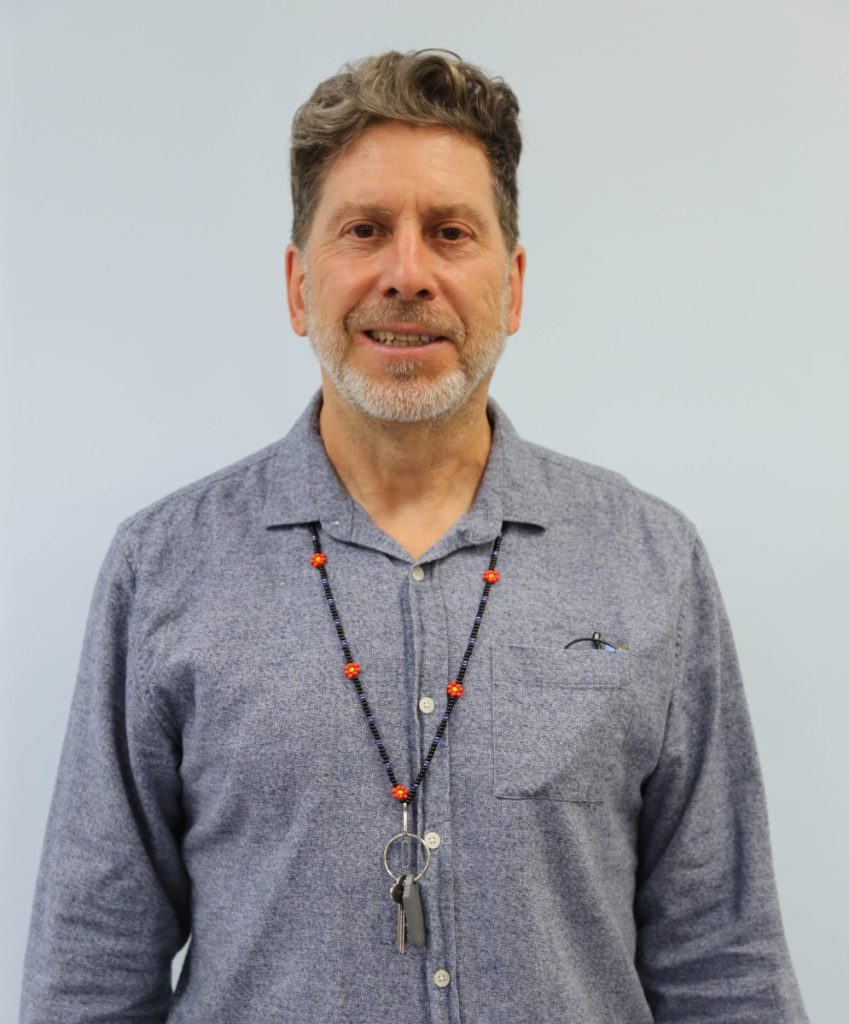
As Vice President Research, my role includes working with the College research community, northern researchers, funding agencies, and partners across a host of disciplines.
A key part of my role is facilitating and advancing good partnerships that build northern applied research capacity. The Aurora Research Institute (ARI), which is the research division of Aurora College, promotes research and innovation in the Northwest Territories.
Our work is most successful when we develop partnerships naturally through outreach by College staff and by being receptive to requests and concerns from outside organizations, including with government, industry, and northern communities.
Research also attracts more research, and a cadre of researchers are often needed to tackle large persistent issues like climate change. Aurora College is made up of three research centres – South Slave Research Centre (SSRC), North Slave Research Centre, and the Western Arctic Research Centre. They are staffed by talented, smart northerners who are constantly engaging with the external research community, including with governments and partners across the North. The work we do with Indigenous governments is a top priority for us.
While a good deal of the College services and staff are funded by the Government of the Northwest Territories, research is largely supported by external funding. By listening to northern concerns and translating those issues into project proposals, we are able to attract academic funding. By bringing in research dollars from sources like the Natural Sciences and Engineering Research Council, CanNor, or the Social Sciences and Humanities Research Council), Aurora College adds to the overall Territorial economy – money which would otherwise be spent in southern Canada.
In research areas where Aurora College does not have academic training programs, or internal researchers dedicated to those subjects, we look for opportunities to build these. ARI’s core mission is to support Indigenous community research capacity. Aurora College addresses any gaps we may have outside partnerships by engaging with a particular focus involving graduate students and northern students studying in the south. Our hope is that by attracting these students to work in the North that they will stay long-term and make it home.
Innovative Practices
Aurora College is constantly seeking out innovative practices and new technologies that can be applied in the North to in the North, to understand research problems. We look for resources that can be used to study and produce outcomes for policymakers and governments that will improve the quality of life. It is one of the biggest rewards of the job. As Vice President, Research, my typical week is varied and it can include internal and external funding reviews. My schedule often includes having meetings with Indigenous community members or external research partners with southern universities, or meeting with larger networks such as ArcticNet (we sit on the Board and are part of the Territorial Advisory Committee).
A big part of my role involves communicating the work we do. This can include writing articles (such as for our college newsletter), creating presentations for research-related workshops, (like the annual Northern Nursing Health Research Day) or preparing opening remarks for important events like the recent Northern Lakes in a Changing Climate Workshop.
Building good relationships to promote research takes considerable time and care. We measure the success of applied research projects with key indicators including social and cultural benefits to the north, economic returns and investments, solutions to problems, and mutually beneficial outcomes and opportunities. Research tends to lead to more research, and it can also lead to training and skills development.
Aurora College is part of a larger northern postsecondary ecosystem, alongside Yukon University and Nunavut Arctic College. It is also a key member of the broader Canadian postsecondary education community, with membership in Colleges and Institutes Canada and the Association of Canadian Universities for Northern Studies, among others.
Aurora College collaborates with international partners as well, with a membership with the University of the Arctic and many others. Our international work is important to advance monitoring and research on a number of fronts, contributing to a better understanding of long-range contaminants under the Stockholm Convention, work with the Northern Contaminants Program (we sit on the Territorial Contaminants Committee), as well as the Arctic Monitoring Assessment Program of the Arctic Council and so much more.